People love to argue about why Wichita’s Northwest side “won” the retail game. Was it money? Growth? Luck?
Here’s my take: it wasn’t luck. It was access, timing, and a string of decisions that made it easier to arrive, easier to park, and easier to build the kind of retail that actually survives a few economic mood swings.
One line version?
The Northwest side got convenient, then it got dense, then it got sticky.
A blunt opinion: retail follows friction, not hype
The Northwest didn’t become the hub because it was trendy. It became the hub because it reduced friction.
That sounds clinical, but you see it everywhere. Shoppers don’t romanticize left turns. They don’t daydream about signal timing. They just want the trip to be predictable. Developers, meanwhile, want visibility and parcels that don’t take five years of meetings to entitle.
Those incentives line up fast when a corridor starts behaving like a machine: steady traffic flow in, clean access points, obvious signage, and enough nearby rooftops to keep weekday sales from collapsing. That’s why places like NewMarket Square work: they sit where convenience, visibility, and repeat traffic all reinforce each other.
The “why there?” question (the friend version)
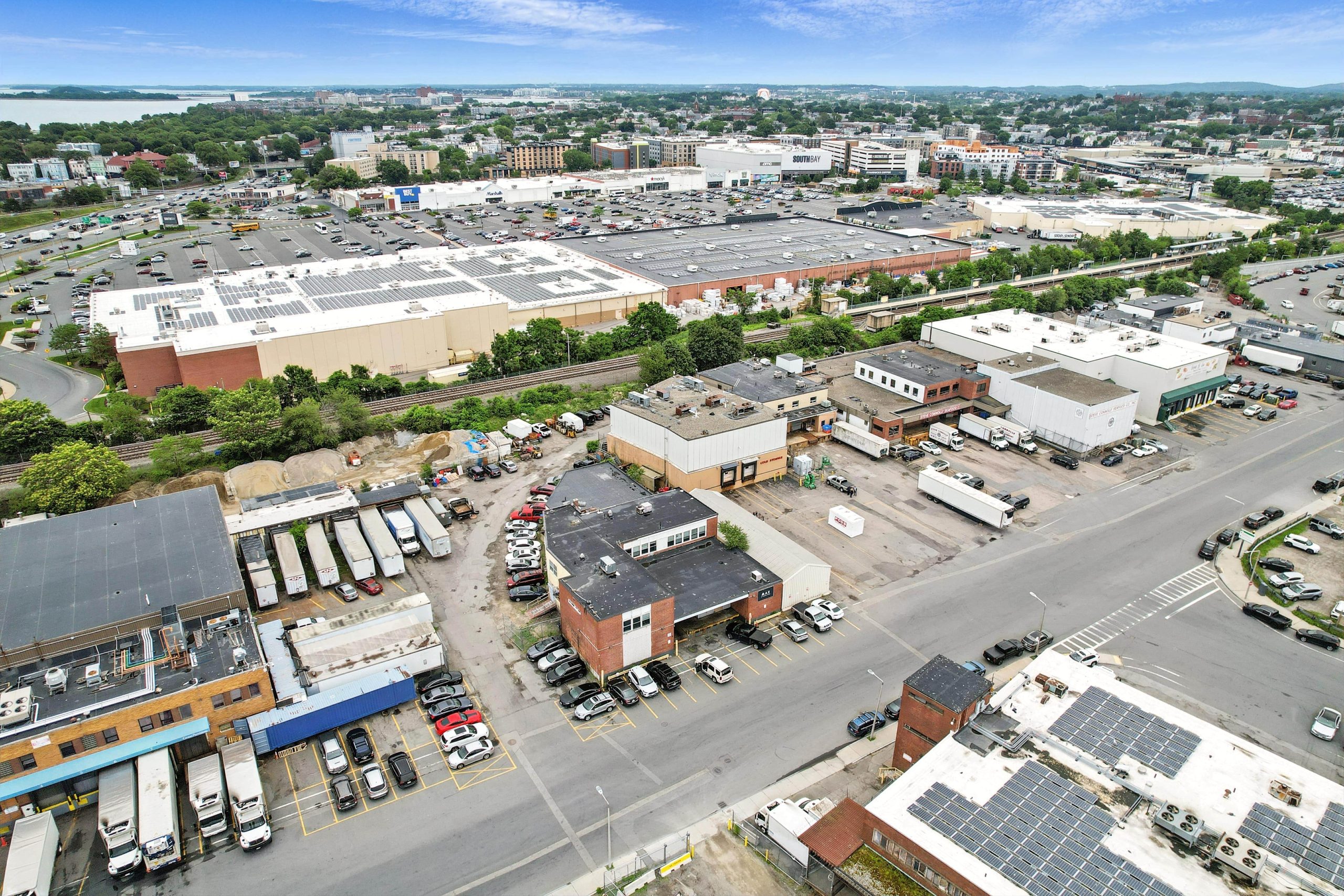
If you’re explaining this to a friend over coffee, it’s basically:
– More people with money moved northwest.
– Roads and intersections made it less annoying to get there.
– Big anchors showed up, and everything else drafted behind them.
– Zoning stopped acting like a brick wall.
And once you have a few winners clustered together, the area starts pulling shoppers from places that used to keep them.
That’s the flywheel.
Corridor mechanics: what changed on the ground
Specialist hat on for a minute.
Retail corridors don’t “rise.” They’re engineered. The Northwest side benefited from a stack of practical improvements that compound each other:
1) Travel-time reliability
Trip predictability matters as much as average speed. Signal coordination, turn-lane capacity, and interchange behavior reduce variance, which retailers quietly love because it stabilizes peak-hour traffic capture.
2) Visibility + parcel usability
Arterials and highway-adjacent parcels don’t just deliver cars; they deliver decision time. A shopper who sees your center early enough can actually get into it without a gymnastics routine of U-turns and side streets.
3) Multimodal upgrades
This isn’t Portland, and nobody’s pretending it is. Still, basic pedestrian crossings, bus reliability improvements, and last-mile connectivity can widen a trade area at the margins. Those margins often decide whether a mid-tier tenant signs.
Now, this won’t apply to everyone, but… in my experience, the corridors that win long-term are the ones where the “easy trip” story holds up in the rain, at dusk, and during holiday surge.
Zoning: the quiet accelerator nobody brags about
You can’t build big-box footprints, mixed-use pads, and service-heavy retail clusters in a corridor where zoning treats every project like a special exception.
Updated zoning did two things at once (a rare feat):
– It enabled scale near major arterials, where large-format retail and high-throughput parking actually make sense.
– It preserved character in core districts by channeling intensity toward places designed to absorb it.
One detail that sticks out: permit activity rose 28% in the Northwest corridor after code amendments (as cited in the draft narrative you provided). That’s not a rounding error. That’s a signal that the development pipeline stopped getting stuck in the mud.
Look, zoning isn’t sexy. But it’s often the difference between “we’d love to” and “we can’t.”
Anchors aren’t just tenants. They’re gravity.
A lot of people talk about anchors like they’re trophies. Wrong framing.
Anchors are gravity wells. They pull in complementary tenants, shape the category mix, and set expectations for what “a normal trip” looks like in that district. Once a corridor has reliable anchors, it becomes easier to finance the next wave of pads, infill, and second-generation reuse (and yes, that includes the awkward phase where a former big-box gets chopped into three or four tenants).
What’s underrated is the hiring pattern effect. When an anchor hires at scale, the corridor suddenly has more daily workers nearby, which props up lunch traffic, quick-service, and convenience retail. It’s not glamorous. It’s durable.
One-line paragraph, because it deserves it:
Density creates errands.
Transportation tweaks that actually move the needle
Some infrastructure projects are ribbon-cutting theater. Others change behavior.
The Northwest side benefited from the unflashy kind: intersections that flow, corridors that don’t randomly choke, and parking supply that’s managed like an asset instead of an afterthought.
A specific example from the provided material: roadway modeling showed a 12, 15% reduction in average inbound travel times (7, 9 a.m.) tied to redesigned signal timing and turn-lane/interchange tweaks along key approaches (noted in your draft). That’s commuter data, sure, but commuter reliability often bleeds directly into retail cadence because it stabilizes daytime movement patterns.
Parking matters too, and I’ll be a little opinionated here: Wichita often argues about parking as if it’s a moral issue. It’s not. It’s operations. If shoppers spend five extra minutes circling, they shorten the trip, skip the second stop, or punt the whole run to another day.
Transit upgrades play a smaller but real role. Increased frequency and reliability don’t need to replace cars to help retail; they just need to capture edge cases: teens, service workers, downtown-to-corridor trips, households that are temporarily one-car, and so on.
The corridor’s evolution: from “shopping” to stacked-purpose trips
Here’s the thing: consumer taste didn’t just “shift.” It reorganized the trip.
The Northwest corridor increasingly reflects a pattern I see across mid-sized metros: shoppers want stacked-purpose visits. Groceries plus pickup. Errands plus coffee. Dining plus one or two discretionary stops. Retailers respond by compressing formats, leaning into service categories, and designing storefronts that support faster in-and-out behavior.
At the same time, landlords like tenants that keep the lights on across more hours. That nudges the mix toward:
– Grocery anchoring and value-oriented staples
– Quick-service and fast-casual clusters
– Service retail (health, beauty, repairs, banking)
– Experiential add-ons where they pencil out (not everywhere does)
And yes, some of this is just economics. When discretionary spending gets jittery, service and necessity categories stabilize rent rolls.
Developers, capital, and the “adaptable box” mindset
If you want to understand why the Northwest has held momentum, watch how space gets designed.
The newer winning pattern isn’t the single-purpose monument. It’s adaptable product: modular leases, pad flexibility, and sites that can be re-tenanted without a total demolition event. Public-private partnerships help here, mostly by reducing pre-development risk: site prep, streetscape alignment, access management, sometimes parking coordination.
I’ve seen corridors fall apart when they overbuild one format and can’t pivot when consumer behavior turns. The Northwest side, by contrast, has leaned into a mix that can absorb churn.
Collaboration is the unglamorous stabilizer
You can build a shiny corridor and still lose the plot if stakeholders don’t coordinate.
What keeps a retail district alive through cycles is the boring stuff:
shared data, joint promotions, event calendars that don’t cannibalize each other, and a willingness to treat vacancy and safety like shared problems rather than someone else’s headache.
Some partnerships even formalize dashboards tracking foot traffic, vacancy, and performance trends (as your draft notes). That’s not just “nice governance.” It changes decision speed. When you can see the corridor’s pulse, you stop guessing and start adjusting.
Ripple effects: the region feels it
The Northwest hub doesn’t just capture Wichita shoppers. It reshapes labor patterns, tax flows, and supplier networks across nearby communities. Larger retail footprints tend to pull in logistics and service jobs, and the tax base expansion funds public services that reach beyond a single ZIP code.
There’s a trade-off, though. Strong hubs can drain older nodes if reinvestment lags elsewhere. The fix isn’t to kneecap the successful corridor. It’s to connect the ecosystem: better connectivity, smarter reuse incentives, and workforce pipelines that let residents across the metro access the jobs the hub creates.
What keeps the Northwest from peaking too early
Retail hubs don’t collapse overnight. They get stale. They become inconvenient. They stop feeling like the easiest option.
So the next phase is less about adding square footage and more about protecting the flywheel:
– keep access reliable as traffic grows
– maintain flexible zoning that allows reuse, not just new build
– invest in workforce development so service quality doesn’t degrade
– design for “fast errands” and longer dwell where it makes sense
– use shared metrics so stakeholders react early, not late
Wichita’s Northwest side didn’t become the region’s retail hub through one mega-project. It happened through compounding decisions that made the corridor easy to use, easy to evolve, and hard to ignore.